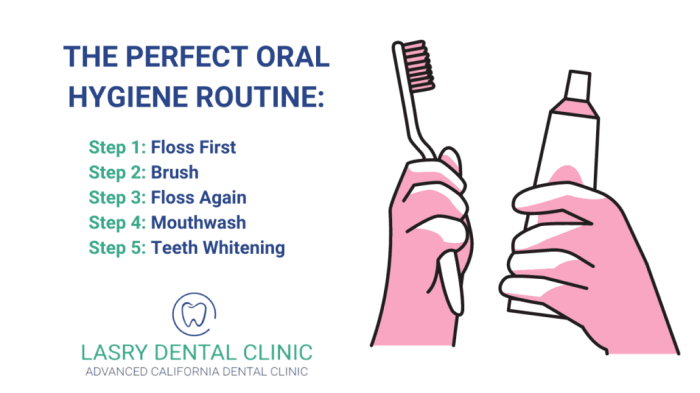
Embark on a journey to better oral health with our guide on Daily Oral Care Routine, delving into key steps and techniques to maintain a healthy smile.
Daily Oral Care Routine
Maintaining a daily oral care routine is crucial for overall dental health. By following a consistent routine, you can prevent oral health issues such as cavities, gum disease, and bad breath.
Recommended Steps for an Effective Daily Oral Care Routine
- Brush your teeth twice a day: Brushing in the morning and before bed helps remove plaque and bacteria that can cause tooth decay.
- Floss daily: Flossing helps remove food particles and plaque from between your teeth, where your toothbrush may not reach.
- Use mouthwash: Rinse with mouthwash to help kill bacteria and freshen your breath.
- Clean your tongue: Use a tongue scraper or your toothbrush to gently clean your tongue, where bacteria can accumulate.
- Visit your dentist regularly: Regular dental check-ups and cleanings can help prevent oral health problems and detect issues early.
Consistency in Oral Care Routine and Overall Dental Health
Consistency in your oral care routine is key to maintaining good dental health. By brushing, flossing, and using mouthwash daily, you can prevent plaque buildup, cavities, and gum disease. Regular dental visits can also help catch any issues early before they become serious. Remember, a healthy smile starts with a daily oral care routine!
Components of Daily Oral Care Routine
When it comes to maintaining good oral hygiene, a daily oral care routine is essential. This routine typically consists of several key components that work together to keep your mouth healthy and free of dental issues.
Brushing
Brushing your teeth at least twice a day is crucial for removing plaque and preventing cavities. It helps to clean the surfaces of your teeth and along the gumline, reducing the risk of tooth decay and gum disease.
Flossing
Flossing complements brushing by removing food particles and plaque from between the teeth and along the gumline. It helps prevent cavities, gingivitis, and bad breath by reaching areas that a toothbrush cannot.
Mouthwash
Using mouthwash as part of your daily oral care routine can help reduce plaque, fight bacteria, and freshen your breath. It reaches areas of the mouth that brushing and flossing may miss, providing an extra layer of protection against oral health issues.
Comparison of Oral Care Products
- Toothpaste: Toothpaste contains fluoride, which helps prevent tooth decay and strengthens enamel. Look for a toothpaste that suits your specific needs, such as sensitivity or whitening.
- Toothbrush: Choose a toothbrush with soft bristles that can effectively clean your teeth without causing damage to the gums. Electric toothbrushes are also a popular choice for thorough cleaning.
- Floss: There are different types of floss available, such as waxed, unwaxed, tape, or floss picks. Find one that you are comfortable using to ensure proper flossing.
- Mouthwash: Mouthwash can be antiseptic, fluoride, or cosmetic. Select one that meets your needs, whether it’s fighting bacteria, preventing cavities, or freshening breath.
Proper Brushing Techniques

Proper brushing techniques are essential for maintaining good oral hygiene and preventing dental issues. By following the correct way to brush teeth, you can ensure thorough cleaning and keep your gums and enamel healthy.
Choosing the Right Toothbrush and Toothpaste
When it comes to brushing your teeth, using the right tools is crucial. Opt for a soft-bristled toothbrush to avoid damaging your gums and enamel. Additionally, choose a fluoride toothpaste to help strengthen your enamel and fight against tooth decay.
Tips for Proper Brushing
- Brush your teeth at least twice a day for two minutes each time.
- Hold your toothbrush at a 45-degree angle to your gums and use gentle, circular motions.
- Don’t forget to brush the inner surfaces of your teeth, as well as your tongue to remove bacteria and freshen your breath.
- Replace your toothbrush every 3-4 months or sooner if the bristles are frayed.
- Avoid brushing too hard, as it can cause gum recession and enamel erosion.
Flossing and Interdental Cleaning
Flossing and interdental cleaning play a crucial role in maintaining good oral hygiene by removing plaque and food particles from areas that a toothbrush cannot reach.
Importance of Flossing
- Flossing helps to remove plaque and food debris between teeth, preventing the formation of cavities and gum disease.
- It also helps to reduce bad breath by eliminating the bacteria that can cause odor.
- Regular flossing can contribute to overall better oral health and prevent more serious dental issues in the future.
Proper Flossing Technique
When flossing, follow these steps for an effective clean:
- Take about 18 inches of floss and wind most of it around one of your middle fingers, leaving about 1-2 inches to work with.
- Hold the floss tightly between your thumbs and forefingers and gently insert it between your teeth using a back-and-forth motion.
- Curve the floss into a C shape against one tooth and gently slide it into the space between the gum and tooth.
- Move the floss up and down against the tooth to remove plaque and debris.
- Repeat this process for all teeth, using a clean section of floss for each tooth.
Interdental Brushes and Water Flossers
Interdental brushes and water flossers are alternative tools that can also help in cleaning between teeth:
- Interdental brushes are small brushes that can be used to clean between teeth and around dental appliances.
- Water flossers use a stream of water to clean between teeth and along the gumline, making them suitable for those who find traditional flossing difficult.
- Both interdental brushes and water flossers can be effective in removing plaque and reducing the risk of gum disease when used correctly in conjunction with regular brushing and flossing.
Mouthwash and Additional Products
When it comes to maintaining a healthy oral care routine, incorporating mouthwash and other additional products can provide extra benefits and support to your overall dental hygiene.
Mouthwash Benefits
- Helps to reduce bacteria in the mouth and freshen breath.
- Can reach areas that brushing and flossing may miss.
- May assist in preventing gum disease and cavities.
Supplementary Products
In addition to mouthwash, there are other supplementary products that can enhance your oral hygiene routine:
- Tongue Scrapers: Used to remove bacteria and debris from the tongue, reducing bad breath.
- Dental Picks: Aid in cleaning hard-to-reach areas between teeth where food particles can get stuck.
Choosing the Right Products
When selecting mouthwash or additional products, consider your individual needs:
- Opt for an alcohol-free mouthwash if you have sensitive gums.
- Choose a tongue scraper with a comfortable grip for ease of use.
- Select dental picks with a thin tip to effectively clean between teeth.
Importance of Regular Dental Check-ups
Regular dental check-ups are a crucial component of maintaining good oral health. In addition to your daily oral care routine, scheduling routine visits to the dentist can help prevent potential issues and ensure long-term oral health.
Benefits of Professional Cleanings and Exams
- Professional cleanings can remove plaque and tartar buildup that regular brushing and flossing may miss, preventing gum disease and tooth decay.
- Dental exams can detect issues early on, such as cavities, gum disease, or oral cancer, allowing for prompt treatment and prevention of further complications.
- Regular check-ups can also help monitor the overall health of your teeth and gums, ensuring that any concerns are addressed promptly.
Tips for Finding a Reliable Dentist
- Ask for recommendations from friends, family, or healthcare professionals for reputable dentists in your area.
- Research potential dentists online, checking reviews and qualifications to ensure they meet your standards.
- Schedule a consultation with a dentist to discuss your oral health goals and ensure they align with the dentist’s approach to care.
- Establishing a good relationship with your dentist can lead to better communication and personalized care tailored to your needs.
Take charge of your oral health by incorporating these daily care tips into your routine, ensuring a bright and healthy smile for years to come.
Question & Answer Hub
How often should I change my toothbrush?
It is recommended to change your toothbrush every 3-4 months or sooner if bristles are frayed.
Can I skip flossing if I use a mouthwash?
No, flossing is essential to remove plaque and debris between teeth that mouthwash may not reach.
Is it necessary to visit the dentist regularly if I maintain a daily oral care routine?
Regular dental check-ups are crucial for professional cleanings and detecting issues early on, even with a good routine.


