
Starting off with How to Improve Dental Health, this introductory paragraph aims to provide an interesting glimpse into the world of dental care, highlighting the importance of maintaining oral hygiene for overall well-being. From best practices to proper techniques, this guide will equip you with the knowledge to achieve optimal dental health.
The Importance of Dental Health
Maintaining good dental health is crucial for overall well-being. Poor dental health can lead to various issues affecting not only the mouth but also other aspects of health, highlighting the significance of proper dental care.
Impact on Overall Health
Poor dental health has been linked to several systemic diseases, including heart disease, diabetes, and respiratory infections. Bacteria from oral infections can enter the bloodstream and cause inflammation in other parts of the body, emphasizing the importance of regular dental check-ups and proper oral hygiene practices.
Statistics on Dental Health
According to the World Health Organization, oral diseases affect nearly half of the world’s population, with cavities being the most common dental issue globally. In the United States, about 47.2% of adults over 30 have some form of periodontal disease, underscoring the need for preventive dental care to maintain good oral health.
Best Practices for Dental Care
Ensuring good dental health involves a combination of daily habits and regular professional care.
Daily Habits for Good Dental Health
Here are some daily habits that promote good dental health:
- Brushing your teeth at least twice a day for two minutes each time.
- Flossing daily to remove plaque and food particles between your teeth.
- Eating a balanced diet and limiting sugary snacks and drinks.
- Drinking plenty of water throughout the day to help wash away bacteria.
- Avoiding tobacco products, which can lead to gum disease and oral cancer.
Importance of Regular Dental Check-ups and Cleanings
Regular dental check-ups and cleanings are essential for maintaining good oral health. Dentists can detect and prevent issues before they become serious problems. It is recommended to visit your dentist at least twice a year for a check-up and cleaning.
Tips for Choosing the Right Dental Products
When it comes to choosing the right dental products, consider the following tips:
- Choose a toothbrush with soft bristles and a small head to reach all areas of your mouth.
- Select a toothpaste with fluoride to help prevent cavities and strengthen enamel.
- Pick a mouthwash that is alcohol-free and contains fluoride to help fight bacteria and freshen breath.
Proper Brushing Techniques
Proper brushing techniques are essential for maintaining good dental health. By following the correct way to brush teeth, you can ensure optimal cleaning and prevent various dental issues.
Types of Toothbrushes and Effectiveness
- Manual Toothbrushes: These are the traditional toothbrushes that require manual movement to clean teeth. They are effective when used correctly, but the key lies in proper technique.
- Electric Toothbrushes: Electric toothbrushes are becoming increasingly popular due to their ability to provide consistent and thorough cleaning. They can be more effective in removing plaque and bacteria compared to manual toothbrushes.
- Sonic Toothbrushes: Sonic toothbrushes use high-frequency vibrations to clean teeth and gums more effectively. They are known for their ability to reach areas that may be difficult to access with a manual toothbrush.
Recommended Duration and Frequency
- It is recommended to brush your teeth for at least two minutes each time. This ensures that you spend enough time cleaning all surfaces of your teeth thoroughly.
- Brushing your teeth at least twice a day, preferably after meals, is ideal for maintaining good dental hygiene. This helps remove food particles and bacteria that can cause plaque buildup and tooth decay.
Importance of Flossing
Flossing is a crucial aspect of maintaining good dental health as it helps remove plaque and food particles that brushing alone cannot reach. This process is essential for preventing gum disease, cavities, and bad breath.
Correct Technique for Flossing Effectively
- Start with around 18 inches of dental floss and wind most of it around your middle fingers.
- Hold the floss tightly between your thumbs and index fingers and gently slide it between your teeth.
- Curve the floss against each tooth and move it up and down to remove plaque and debris.
- Use a clean section of floss for each tooth to avoid transferring bacteria.
- Rinse your mouth after flossing to remove any loosened particles.
Benefits of Using Dental Floss Regularly
- Prevents cavities by removing plaque and food debris between teeth.
- Reduces the risk of gum disease by maintaining gum health and preventing inflammation.
- Helps in maintaining fresh breath by removing bacteria that can cause bad odor.
- Contributes to overall oral health and can lower the risk of systemic diseases linked to poor dental hygiene.
Impact of Diet on Dental Health
Eating habits play a crucial role in maintaining good oral health. The food we consume can either promote healthy teeth and gums or lead to dental issues. It’s essential to understand how diet can affect our dental health to make informed choices for overall well-being.
Foods Beneficial for Dental Health
- Crunchy fruits and vegetables like apples and carrots help clean teeth naturally and stimulate saliva production, which aids in washing away food particles.
- Dairy products such as cheese, milk, and yogurt are rich in calcium and phosphates that strengthen tooth enamel and promote overall oral health.
- Green tea contains compounds that can suppress the growth of bacteria in the mouth, reducing the risk of cavities and gum disease.
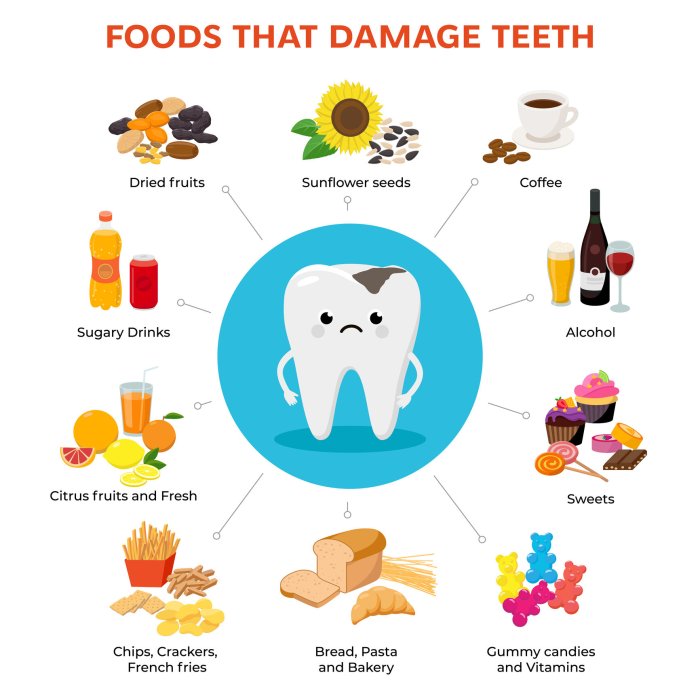
Foods Harmful to Dental Health
- Sugary snacks and beverages like candies, sodas, and pastries can fuel the growth of harmful bacteria in the mouth, leading to tooth decay and cavities.
- Acidic foods and drinks such as citrus fruits, vinegar-based dressings, and carbonated drinks can erode tooth enamel over time, making teeth more susceptible to damage.
- Sticky foods like caramels and dried fruits can cling to teeth and promote plaque formation, increasing the risk of dental issues.
Importance of Limiting Sugary and Acidic Foods
Reducing the consumption of sugary and acidic foods is crucial for maintaining optimal dental health. These types of foods can create an acidic environment in the mouth, which weakens tooth enamel and promotes bacterial growth. By limiting sugary and acidic foods, individuals can lower their risk of developing cavities, gum disease, and other oral health problems. It’s important to practice moderation and opt for healthier alternatives to protect teeth and gums in the long run.
Common Dental Issues and Solutions
When it comes to dental health, there are several common issues that many people face. Understanding these problems and knowing how to prevent and treat them is essential for maintaining a healthy smile.
Cavities
Cavities, also known as tooth decay, occur when bacteria in the mouth produce acids that erode the enamel of the teeth. To prevent cavities, it is important to brush and floss regularly, avoid sugary foods and drinks, and visit the dentist for regular check-ups. Treatment options for cavities include fillings, crowns, and root canals.
Gum Disease
Gum disease, or periodontal disease, is an infection of the gums that can lead to tooth loss if left untreated. To prevent gum disease, it is crucial to practice good oral hygiene, quit smoking, and eat a balanced diet. Treatment options for gum disease may include professional cleanings, scaling and root planing, and surgery in severe cases.
Tooth Sensitivity
Tooth sensitivity is a common issue where the teeth become sensitive to hot, cold, sweet, or acidic stimuli. Preventive measures for tooth sensitivity include using a soft-bristled toothbrush, avoiding acidic foods and drinks, and using desensitizing toothpaste. Treatment options may involve fluoride treatments, dental bonding, or root canal therapy.
Oral Hygiene Products
Maintaining good oral hygiene goes beyond just brushing and flossing. Using the right oral hygiene products can also play a crucial role in keeping your teeth and gums healthy. In this section, we will discuss the different types of mouthwash, toothpaste recommendations, and the importance of using mouthwash and dental rinse as part of your daily oral care routine.
Types of Mouthwash and Benefits
- Antibacterial Mouthwash: Helps to kill bacteria in the mouth, reducing plaque buildup and preventing gingivitis.
- Fluoride Mouthwash: Strengthens enamel and prevents tooth decay by remineralizing the teeth.
- Whitening Mouthwash: Contains ingredients to help remove surface stains and maintain a brighter smile.
- Sensitive Mouthwash: Formulated for those with sensitive teeth and gums, providing relief from discomfort.
Toothpaste Recommendations
- Fluoride Toothpaste: Recommended for most individuals to prevent cavities and strengthen enamel.
- Desensitizing Toothpaste: Ideal for those with sensitive teeth to help alleviate pain and discomfort.
- Whitening Toothpaste: Contains abrasives or chemicals to remove stains and brighten the teeth.
- Natural Toothpaste: Made with natural ingredients and free from artificial additives for a more organic approach.
Importance of Using Mouthwash and Dental Rinse
Using mouthwash and dental rinse can provide additional benefits to your oral care routine. They can reach areas that brushing and flossing may miss, reducing bacteria and freshening breath. Mouthwash containing fluoride can also help strengthen enamel and prevent cavities. It is essential to choose a mouthwash that addresses your specific oral health needs and use it regularly as directed to maximize its effectiveness.
Wrapping up our discussion on How to Improve Dental Health, it’s evident that taking care of your teeth is crucial for a healthy smile and overall well-being. By following the tips and guidelines Artikeld in this comprehensive guide, you can ensure that your dental health remains in top shape for years to come.
Common Queries
How often should I visit the dentist for check-ups?
It is recommended to visit the dentist for check-ups at least twice a year to maintain good dental health.
What type of toothbrush is best for optimal cleaning?
Soft-bristled toothbrushes are generally recommended as they are gentle on the gums and teeth while effectively cleaning.
Is flossing really necessary for dental health?
Yes, flossing is crucial as it helps remove food particles and plaque between teeth that brushing alone cannot reach.


