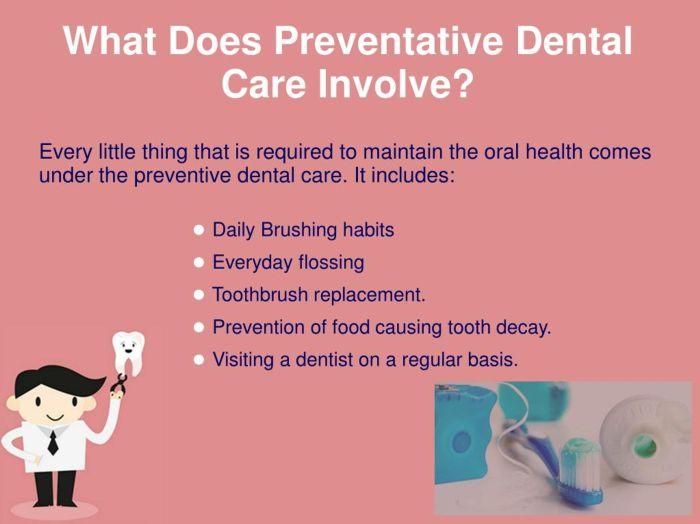
Embark on a journey through the realm of Preventive Dental Care, where the focus lies on maintaining a healthy smile and overall wellness. Discover the secrets to a cavity-free existence and the importance of regular dental check-ups in this enlightening exploration.
Introduction to Preventive Dental Care
Preventive dental care encompasses a range of practices and treatments aimed at maintaining oral health and preventing dental issues before they become serious.
Regular dental check-ups are essential for preventive care as they allow dentists to detect early signs of problems and address them before they worsen.
The Importance of Preventive Dental Care
Preventive dental care plays a crucial role in maintaining overall oral health by preventing cavities, gum disease, and other oral health issues.
- Regular cleanings and exams help remove plaque and tartar buildup, reducing the risk of cavities and gum disease.
- Early detection of oral health issues can prevent the need for costly and invasive treatments in the future.
- Good oral hygiene practices, such as brushing and flossing regularly, are key components of preventive dental care.
Why Regular Dental Check-ups are Crucial
Scheduling regular dental check-ups is essential for maintaining good oral health and preventing dental problems.
- Dentists can identify and treat oral health issues early on, preventing them from escalating into more serious problems.
- Regular cleanings can help prevent the buildup of plaque and tartar, reducing the risk of cavities and gum disease.
- Educating patients on proper oral hygiene practices is an important aspect of regular dental check-ups.
Benefits of Preventive Dental Care
Regular preventive dental care offers a range of benefits that go beyond just maintaining good oral health. By taking proactive steps to prevent dental issues, individuals can enjoy the following advantages:
Avoiding Costly Treatments
- Preventive dental care helps identify and address dental problems in their early stages, which can prevent the need for more extensive and costly treatments in the future.
- Regular check-ups and cleanings can catch issues like cavities or gum disease before they escalate, saving patients money in the long run.
Preventing Dental Issues
- By practicing good oral hygiene habits and visiting the dentist regularly, individuals can reduce their risk of developing common dental problems like cavities, gum disease, and tooth decay.
- Preventive care measures such as dental cleanings, fluoride treatments, and sealants help protect teeth from damage and decay.
Contributing to Overall Well-being
- Healthy teeth and gums are essential for overall well-being, as oral health is closely linked to systemic health.
- Preventive dental care can help reduce the risk of developing serious health conditions such as heart disease, diabetes, and respiratory infections.
Components of Preventive Dental Care
Regular cleanings and exams play a crucial role in preventive dental care by helping to detect and address any issues early on. In addition to these routine visits, other key components include fluoride treatments, dental sealants, and practicing good oral hygiene at home.
Fluoride Treatments
Fluoride treatments involve applying a concentrated form of fluoride to the teeth to help strengthen enamel and make it more resistant to decay. This treatment can be particularly beneficial for individuals who are at a higher risk of developing cavities.
Dental Sealants
Dental sealants are thin, protective coatings applied to the chewing surfaces of the back teeth to prevent food particles and bacteria from getting trapped in the grooves. By creating a barrier, sealants help reduce the risk of tooth decay in these hard-to-reach areas, especially for children who may not be as thorough with their brushing.
Practicing Good Oral Hygiene at Home
Maintaining good oral hygiene at home is essential for preventing dental issues. This includes brushing your teeth at least twice a day, flossing daily, and using mouthwash to help kill bacteria. By establishing a consistent oral care routine, you can help keep your teeth and gums healthy between dental visits.
Importance of Dental Care
Ensuring proper dental care is crucial for maintaining overall health and well-being. The health of our teeth and gums can have a significant impact on our systemic health, leading to various complications if neglected.
Connection between Oral Health and Systemic Health
There is a strong relationship between oral health and systemic health, with poor dental hygiene contributing to a range of health issues beyond the mouth. For example, gum disease has been linked to conditions such as diabetes, heart disease, and respiratory infections.
Examples of Neglecting Dental Care
- Untreated cavities can lead to tooth infections, which can spread to the jawbone and even the bloodstream, causing serious infections throughout the body.
- Poor oral hygiene can result in the buildup of plaque and tartar, leading to gum disease. This inflammation in the gums can exacerbate existing conditions such as diabetes and cardiovascular disease.
- Missing routine dental check-ups and cleanings can allow minor dental issues to progress into more severe problems, requiring invasive and costly treatments.
In conclusion, embracing Preventive Dental Care is not just about preserving your smile; it’s about safeguarding your entire well-being. Take charge of your oral health today and reap the benefits of a radiant smile and a healthier you.
Essential Questionnaire
Is preventive dental care only about cleanings and exams?
While cleanings and exams are vital components, preventive dental care also includes practices like fluoride treatments, dental sealants, and maintaining good oral hygiene at home.
How often should one have a dental check-up for preventive care?
It is recommended to have a dental check-up every six months to ensure early detection of any potential issues and to maintain optimal oral health.
Can neglecting dental care impact overall health?
Yes, neglecting dental care can lead to systemic health issues as oral health is interconnected with overall health. It can result in conditions like heart disease and diabetes.


